
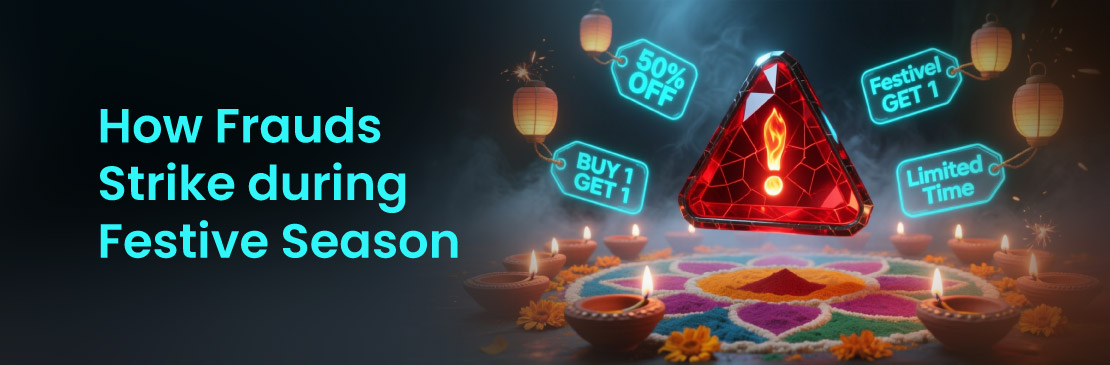
How Frauds Strike during Festive Season
Festivals bring excitement: new clothes, lively decorations, shopping sprees. But when festival lights come on, fraudsters switch on too. As people let their guard down in the rush to buy deals, scams often follow.
During the last Diwali season, McAfee found that 45% of Indian shoppers say they or someone they know was a victim of a “deepfake shopping scam” involving fake websites or celebrity endorsements. Of those, more than half lost money, often over ₹41,500. This shows how frequent and persuasive scams have become during festivals.
How These Frauds Work?
Some common ways frauds increase during festivals:
Too-good offers and flash sales
Scammers set up websites that look like trusted online stores with massive discounts. Because everyone is hunting deals, many don’t check the URL or whether the seller is real.
Fake social media influencer endorsements
Deepfake technology or impersonation is used to make it look like famous personalities are recommending a product. This builds trust instantly, making it easier to trick people into buying or giving payment info.
Phishing via messages and delivery notifications
Someone sends what looks like a message from your delivery service or bank: “Your order failed”, “Click to confirm payment”, etc. Click the wrong link and you may hand over OTPs or financial details.
Fraud in gift cards, payment links, and refund notices
Fake “refund alerts” or “gift card wins” push people to share sensitive info. During peak festive sale events like Diwali or major retail discounts, these types of messages increase dramatically.
Why Scams Spike During Festivals?
-
High volume of online shopping: Many Indians plan to buy more this festive season than last.
-
Greater emotional pressure: “Limited-time deals”, “flash sales” and “only today discounts” create urgency. People feel like they must act fast.
-
Distracted mindset: With celebrations, people may ignore small checks like verifying website SSL or seller authenticity.
-
New or less-experienced shoppers: Many first-time online buyers are drawn in by bright banners or celebrity posts without knowing how to spot red flags.
How to Stay Safe
Here are simple habits you can follow so you can shop happily and safely:
-
If a deal seems unbelievably good (like huge discount or limited time), pause and check whether the seller name, reviews, or website URL are legitimate.
-
Use secure payment methods (credit card, UPI with verification etc.), avoid paying by unverified methods.
-
Keep your device’s security updated (antivirus, OS), don’t share OTP or sensitive info over SMS or WhatsApp forwarders.
-
Before entering your card or payment details, check if the website has https, looks professional, and has good reviews from multiple sources.
-
Talk to older family members too. Help them spot fake messages or disinformation.
-
Set small spending rules. Set aside a budget for festival shopping so you don’t get tempted into bogus deals.
Festivals are meant to bring joy, not stress. But frauds are real, rising every year. The data shows we’re losing money, and people are getting tricked at bigger scales. The best defence is being alert, verifying every deal, shopping carefully. Enjoy your festivals…and your savings too.

Do you have any questions? Write to us
.jpg)
 Do_thumbnail.PNG)