
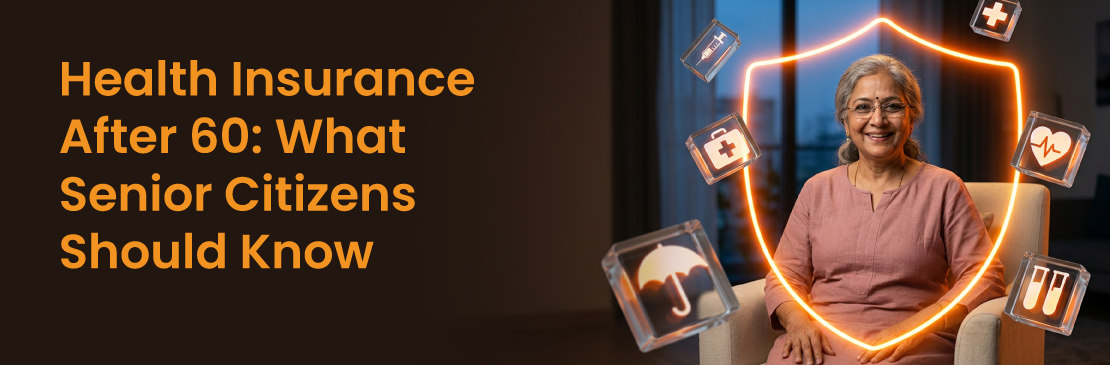
Health Insurance After 60: What Senior Citizens Should Know
When parents turn 60, health insurance often becomes a family conversation that nobody quite knows how to begin. There may already be a policy through a son’s or daughter’s employer, an old individual policy, or simply the assumption that the family will manage medical expenses if something happens.
But a sudden hospitalisation can put that assumption to the test. And if you are looking for health insurance for a senior citizen who is in their sixties or seventies, there are a few things worth understanding before choosing a policy.
Is It Too Late to Buy Health Insurance After 60?
No, turning 60 does not automatically make someone ineligible for health insurance. In 2024, the Insurance Regulatory and Development Authority of India (IRDAI) lifted the age limit, making a citizen of any age eligible to purchase new health insurance.
However, eligibility, premiums and coverage depend on the specific policy and the insurer’s assessment. Existing conditions such as diabetes, hypertension or heart disease need particular attention. Insurers may ask for medical tests, impose waiting periods or apply other restrictions according to the policy terms.
Before buying, check the co-payment clause, room-rent limits, exclusions and waiting periods for pre-existing diseases. A policy with a lower premium may require you to pay a significant share of hospital bills yourself. Also, disclose medical conditions honestly. If your parents already have health insurance, don’t discontinue it before understanding what new coverage would mean for them.
Family Floater v/s Separate Policy
A family floater gives multiple family members access to one shared sum insured. It can work well for younger families, but including senior citizens requires a closer look. For instance, imagine a family floater covering a couple, their children and one parent. If the parent needs hospitalisation and uses a substantial part of the cover, less remains available for everyone else during that policy year. Premiums can also be affected by the age of the oldest insured member, depending on the product.
A separate policy for senior citizens gives parents their own sum insured, independent of the family’s shared cover. It can make expenses easier to plan for, although premiums may be higher and the policy may have its own restrictions. Neither of these options is automatically better. Before deciding, it’s wise to compare the actual premiums, coverage limits, co-payments and medical needs of each family member.
Can Ayushman Bharat Help?
The Ayushman Bharat Pradhan Mantri Jan Arogya Yojana (AB PM-JAY) can be an alternate route to healthcare support. Under the expanded scheme, all senior citizens aged 70 and above are eligible irrespective of income, with coverage of up to ₹5 lakh per year on a family basis. Those already covered under AB PM-JAY receive an additional cover of up to ₹5 lakh for eligible senior citizens, separate from the cover shared with younger family members.
The scheme can significantly ease eligible hospitalisation expenses. However, treatment must fall within the scheme’s coverage and applicable conditions, including the rules around empanelled hospitals. Private health insurance may offer different benefits, hospital access and coverage terms. Ayushman Bharat and private insurance should therefore be evaluated on their own merits rather than assumed to be interchangeable.
Making An Informed Decision
Health insurance after 60 is not simply about finding a policy that accepts senior citizens; it’s about understanding how much financial protection it actually offers when they need care. For many families, these decisions are put off because there is always another expense to take care of, or because everyone assumes someone will figure things out when the need arises. Often, that someone is a daughter or daughter-in-law, balancing her own household responsibilities while looking after her parents or in-laws.
You don’t have to figure everything out at once. Start by checking what health cover your family already has, whether your parents qualify for Ayushman Bharat, and what expenses an insurance policy would actually cover. The best time to understand these options is before a hospital admission forces you to find out.

Do you have any questions? Write to us
.jpeg)