
A movement of hope: Arunima Kumar’s Quiet yet powerful Dance Revolution
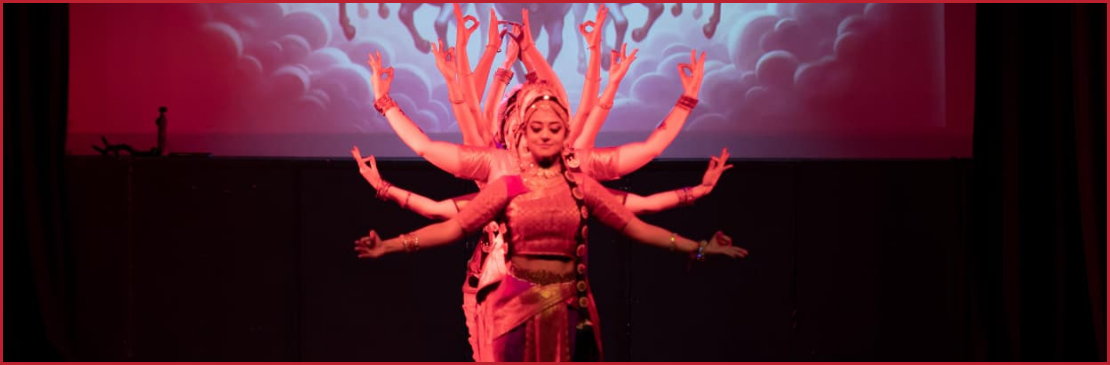
For people who think Indian classical dance is limited by age, ability, geography, or audience, Arunima Kumar challenges every one of these assumptions.
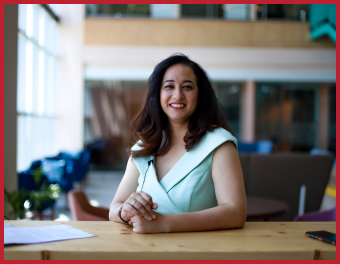
Award-winning Kuchipudi dancer, choreographer, and educator Arunima Kumar is a globally recognised leader in Indian classical dance. With over three decades of experience, she has reimagined Kuchipudi as a contemporary, inclusive, and internationally relevant art form.
Arunima Kumar is internationally recognised as a visionary cultural leader—reshaping Kuchipudi for the 21st century while remaining rooted in its spiritual and classical foundations.
Arunima Kumar’s Kuchipudi journey
Her journey into dance was not a conscious choice of her own.
“I didn’t decide to learn- my mother did”, Arunima recalls. A theatre artist herself, her mother was deeply moved after watching a performance by Padma Bhushan Swapna Sundari and enrolled six-year-old Arunima in her classes- an early moment that would quietly set the foundation for a lifelong relationship with Kuchupudi.
Motivation at the right age has the right impact!
Building on that early foundation, Arunima’s path initially moved beyond the arts. She went on to study economics and finance, performing even during her time at the London School of Economics, before eventually relocating to the UK after marriage. It was there that a dance encounter with an Italian student eager to learn Kuchipudi drew her toward teaching. “I realised dance wasn’t just performance. It was science, story, spirituality,” she says. “And it could be a form of healing.”
A Turning point beyond the stage
Trained in precision and perfection, the experience proved unexpectedly liberating. “You go on stage ready to fail, and you’re fine with it—that’s when I stopped dancing to prove anything,” she reflects. Witnessing a wheelchair dancer perform with extraordinary grace challenged her ideas of ability and perfection, becoming a turning point. “It changed me as a person,” she says. “That’s when I knew dance had to go everywhere—prisons, hospitals, care homes. Why should art belong to only a few?”
That belief soon took her far beyond conventional performance spaces and into some of the world’s most iconic cultural and civic venues. Arunima went on to become the first Kuchipudi dancer to perform at 10 Downing Street, Buckingham Palace, Westminster Abbey, and the Victoria & Albert Museum—milestones that brought the form into the global cultural mainstream.
Breaking the Boredom myth
Changing the perception of classical dance as “boring” remains one of the biggest challenges today. Deep-rooted stereotypes often distance people—especially younger audiences—from engaging with the form. Breaking these notions requires constant reimagining, visibility beyond traditional spaces, and the courage to present classical dance as dynamic, accessible, and relevant to contemporary life.
A Mission for the Next Generation
At the heart of her work is a mission to inspire young people to take up classical arts and truly soak in their depth and discipline. She believes that early, meaningful exposure can help the next generation see classical dance not as a distant tradition, but as a powerful, expressive art form that shapes confidence, creativity, and cultural connection.
Art, Advocacy & Social Impact
-
A pioneer of dance and well-being, Arunima has developed internationally recognised practices using classical dance and yoga for hospitals, prisons, care homes, disability centres, and corporate well-being.
-
Led historic rehabilitation work at Tihar Jail, enabling women inmates—including life-sentence prisoners—to perform publicly.
-
Commissioned for human rights, gender justice, and inclusion-focused productions, including Bandeeni, Stree at Southbank centre, Burnt- SATI – Shadows of My Rage, and Antardrishti.
-
The only Kuchipudi dancer commissioned by Arts Council England for a large-scale inclusive collaboration with wheelchair dancers (Avatara).
-
Artistic collaborator with the world’s largest blind orchestra (Inner Vision Orchestra) and inclusive companies across Europe.
-
Dance for Parkinson’s, elderly care homes, community centres, drug rehab centres, hospitals, community schools, universities
-
Corporate performances include Clifford Chance, British Airways, Bicester Village, TCS, Nomura, etc
Recognition
-
British Empire Medal (BEM) – First Kuchipudi dancer to receive the honour
-
Ustad Bismillah Khan Yuva Puraskar – Sangeet Natak Akademi
-
NRI Award for Arts & Community Service – House of Lords
-
Global Icon Award, FICCI FLO Award, She Inspires (House of Lords), Woman of the Year, Woman of Excellence, Wintrade Award, among many others
Arunima Kumar on the Importance of Financial Literacy for Women
Financial literacy is extremely important for women because it directly impacts their freedom of choice, confidence, and long-term security—areas where women have historically faced systemic gaps in equal representation.
My journey has taught me that financial literacy is as empowering as artistic excellence. I studied finance and economics at world-class institutions and built a successful corporate career with organisations like American Express and Accenture. That foundation gave me the confidence to believe I could succeed in any field. Choosing to leave that stability to start a dance company in a foreign country was considered risky—even foolish by some—but I was driven by a deeper purpose: to create awareness, share the joy of Indian arts, and challenge the perception of classical dance as elitist or inaccessible.
As a classical dancer, choreographer, and founder of the Arunima Kumar Dance Company—the largest Kuchipudi institution in the UK—I quickly realised that talent alone does not sustain a career. Understanding budgeting, valuing my work, applying for and managing grants, fundraising, planning long-term, and navigating taxes and policies became essential. Starting without a network or recognition, I built a structured plan and trained myself to create a professional brand and a sustainable career.
Financial knowledge allowed me to make informed decisions, negotiate with confidence, build resilience during uncertain times like Covid, and create impact beyond myself by supporting other artists and nurturing the next generation.
At the heart of Arunima Kumar’s work lies a simple but radical belief: that Indian classical dance is perfect at any age and for every ability. For her, the future of Kuchipudi is not confined to traditional theatre stages but lives in its ability to travel—to schools, care homes, hospitals, public spaces, and communities often left outside the cultural conversation. Her mission is rooted in advocacy and the steady dismantling of stereotypes that label classical dance as exclusive or inaccessible.
As 2026 begins, Arunima is preparing to take her performances even further, continuing to meet audiences where they are and reminding them that classical dance is not something to be preserved behind velvet curtains, but an art form meant to be lived, shared, and felt by all.

Do you have any questions? Write to us