
Ayushi Mishra: Shaping the Future with AI and Digital Twins

In a world facing increasingly complex challenges, Ayushi Mishra is harnessing AI and drones to build scalable solutions to real-world problems, with a vision rooted in innovation.
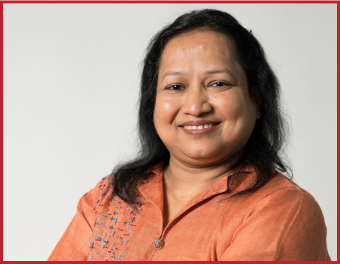
Ayushi Mishra is the Co-Founder of DronaMaps and Head of Product, AI CoE sustainable cities based in IITK. DronaMaps created an AI-powered platform that reconstructs and analyses 3D maps. Over the years they have served a range of use cases like the development of cities, villages and neighbourhoods with pipeline planning, precision agriculture and flood mitigation, among others. However, they hit national scale with their work on Drone Analytics monitoring system deployed at NHAI and MoRTH to track the highway infrastructure of the country.
An Academic Foundation:
Her father being a doctorate holder in Physics, and her mother being a doctorate holder in Chemistry, she grew up in an environment that encouraged education.
She completed her schooling in Indore, pursued an undergraduate degree in Biomedical Engineering, and later earned a Master of Science in Engineering Management from Johns Hopkins University, with a technical concentration in Biomaterials. Growing up around science taught her early that rigor was not optional. Interdisciplinary science appealed to her deeply, which is why she chose Biomedical Engineering in the first place, and that foundation eventually led her toward geospatial data. Much of the underlying algorithmic thinking, she found, carries across disciplines remarkably well.
Building DronaMaps:
Ayushi Mishra’s entrepreneurial journey began during her graduate studies at Johns Hopkins University. In the middle of her time at Hopkins, she founded her first company, Marigold Health, an AI-based platform designed to make peer support and therapy more accessible and scalable.
Around the same time, Ayushi Mishra returned to India to work with a longtime friend from Johns Hopkins. He had purchased a drone to film her graduation, and while exploring its capabilities, they realized the level of high-resolution data it could capture. The idea quickly gained direction when Ayushi visited a dam project site that was expected to displace 184 villages, yet there was very little reliable information available, no accurate maps and limited ground-level data. That experience made it clear to her that high-resolution drone data could significantly improve the way such planning and infrastructure decisions were made. That realisation eventually led to the creation of DronaMaps.
Challenges:
-
One of the first challenges Ayushi Mishra faced after moving to India was unlearning many of the assumptions she had about startups and understanding what it truly meant to build a deep-tech company in the Indian context. She realized that geography was not a minor factor; it was central to the entire business. India’s scale, varied terrain, and governance structures strongly influenced what was technically and operationally possible, often in ways that did not fit startup playbooks developed in other parts of the world.
-
As DronaMaps expanded across different projects and use cases, Ayushi Mishra and her team realized that geospatial information was only one part of the picture; data had to be treated as a connected system rather than as isolated datasets. They also saw the importance of using data not only to describe what had already happened, but also to support forecasting and decision-making.
-
The biggest test of this approach came during the COVID-19 pandemic. That period taught the team how to operate and deliver at scale, and how to combine management information systems with geospatial and spatial intelligence in a way that remained effective under pressure.
-
Building on that experience, DronaMaps evolved into an infrastructure technology monitoring company that tracks highways across the country, measures infrastructure development, identifies potholes, and monitors other critical infrastructure indicators.
A Journey of Scale:
-
Over the course of building DronaMaps, Ayushi Mishra and her team have worked across more than ten smart cities and over a hundred villages, including smart village projects carried out in collaboration with UC Berkeley. During the COVID-19 pandemic, they developed command-and-control centres for seven Indian states, covering 133 districts.
-
The company has also worked with major enterprises and conglomerates such as Reliance Industries and SAP. Its flagship deployment today is with the National Highways Authority of India (NHAI) through the DAMS program, where DronaMaps now covers nearly 20,000 to 30,000 kilometres of highways every month. The scale of this high-resolution mapping is equivalent to covering the highways of countries such as Spain or Italy five to six times within a single month, with support from drone service providers operating on the ground.
-
This deployment has significantly improved visibility into the quality of highways and infrastructure across the country and is considered one of the largest computer vision deployments in India.
Recognition:
-
Forbes’ 30 Under 30 Asia list in 2020, under Enterprise Technology.
-
The Economic Times, at a ceremony chaired by Steve Wozniak, recognised their AI work.
-
Recognized by Vogue India as one of the eight women in STEM leading India’s fight against COVID-19.
-
Named to Geospatial World’s 50 Rising Stars list for 2025.
-
Selected as an Oxford–Chevening Research, Science and Innovation Leadership Fellow.
Ayushi Mishra on the Importance of Financial Literacy for Women
Financial literacy isn’t a soft add-on. Understanding money and understanding the legal framework that runs enterprises and personal finances are the things that actually let you make choices: what’s safe, where you can take a risk, what you should be aiming for, and what’s even within the realm of possibility. Every credential, every board seat, everything sits on top of that layer of independence. It has to exist first.
One thing I feel strongly about is that women should have access to their own chartered accountants and their own legal counsel, because at any given point you may need to understand the real implications of what you’re dealing with, on your own terms, not filtered through someone else. There’s also a social fabric issue here. Household finances in this country have historically been managed by men, even when women are the ones running the household day to day, and that’s still true today.
At an industry scale, that same lack of visibility persists. Financial literacy, at its core, means always being aware of your own financial position, your own access, your own insurance and finances, clearly and directly. So that there is control over your own life, and that control is non-negotiable, not something you borrow from someone else or wait to be handed.
Even education doesn’t automatically get you there. I’d consider myself highly educated; I had every kind of access, and it still took me time to figure out what financial literacy actually meant for me. The ability to earn is not the same thing as the ability to grow your own wealth, or to make decisions on top of it, or to understand how money works in the larger scheme of things beyond your own paycheck.
For me, it was close to a ten-year journey to arrive at that clarity, largely because I was so embroiled in the technical work and the impact of what I was building that my own financial safety and financial health took a back seat. That’s the one piece of advice I’d give to anyone, especially anyone hoping to build something of their own: take that seriously early, don’t let it be the thing you figure out last.

Do you have any questions? Write to us
.png)