
From Numbers to Nurturing: The Dream of a mother to Educate her daughters
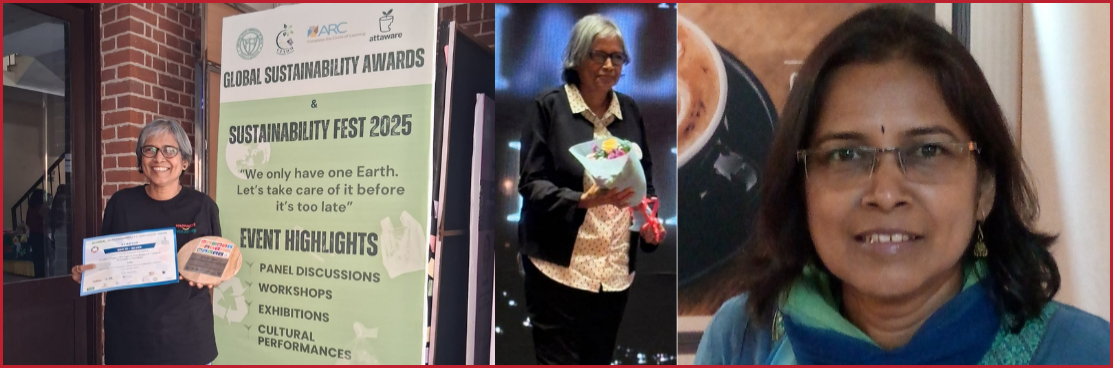
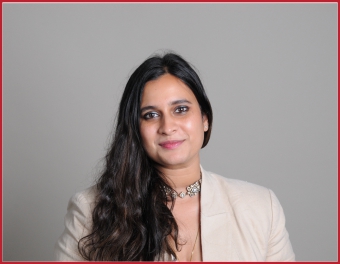
Sugandhi Baliga is not a name that trends on social media, nor does she court the spotlight. Yet her life's work — spanning statistics, human resources, philanthropy, and elder care — tells a story of rare purposefulness. Raised in a modest middle-class family in Mumbai by a mother who made education her daughters' birthright, Sugandhi went on to build a distinguished career across some of India's most respected institutions, including Tata Trusts, before founding Happy2Age, a community-based Active Aging initiative for senior citizens. A single mother by choice, a researcher, a writer, an arts-based therapist and now an award-winning founder cum entrepreneur in the social sector, she speaks with the quiet conviction of someone who has always followed her heart — and has rarely looked back. This happened because her mother dreamt for her 4 daughters. This is the story of a woman who dared to dream.
In Conversation:
The Roots of Ambition
Q: Take us back to the beginning. What was your family background like growing up, and was there someone who planted the seed of ambition in you?
We were a very simple middle-class family. My father was with the bank and had to start from scratch. My mother had four daughters to bring up, and we kept shifting places with his transfers. Through all of it, she was the pillar — for all four of us, she shaped our values, our dreams, our sense of justice. She could not tolerate injustice, and we have all imbibed that from her.
My mother was the last of eight daughters in a family of eleven siblings. She was the only one who reached the 9th standard, and by then she was 16 — and they married her off. She felt unfinished with her education. So, she made herself a promise: if I have daughters, education will be the first priority. She was very clear: before marriage, you must be on your feet, economically. No compromise on that.
We lived six of us — and a dog — in 250 square feet. Four sisters taking turns at a shared physical space to study. But one clear vision held us all together: we must be educated, we must earn, we cannot be dependent.
Statistics, HR, and an Unlikely Path Forward
Q: You pursued statistics at Mumbai University and then an MBA in HR from Jamnalal Bajaj Institute. What drove you toward higher education, and how did those disciplines shape your later work?
My dream was actually to become a doctor and serve people in villages. That didn't happen. So, I went with the flow — and I found two professors who made statistics come alive for me. I was good with numbers, and that alignment just happened organically.
The MBA was different — it came with purpose. While working at Stockholding Corporation, I attended a training that opened my eyes. My heart was somewhere else entirely. I realised that I wanted developmental work, training, people — so I enrolled part-time for an MBA in HR.
In hindsight, those two disciplines have been fundamental to everything I've done since. Statistics gave me the ability to design research, measure outcomes, and think in data. HR gave me an understanding of people, teams, and change. At Tata Trusts, I also had an opportunity to head impact assessment team — measuring outcomes across several themes they funded, from education to tribal welfare. SROI, qualitative case studies, sampling — it all came together. I don't think I could have done that work without those foundations.
The Leap into the Social Sector
Q: You left a well-paying corporate career to join an NGO at one-fifth of your salary. What made you take that leap?
The urge to do something meaningful just kept getting stronger. One day I simply applied to an NGO called YUVA and I got in. My father was upset. Understandably. He said you're going to lose a lot of money. And I did. But I could jump, because I was single and had no financial commitments beyond myself.
That first NGO took me into the slums of Mumbai, Pune, and Nagpur — street children, women facing domestic violence, cooperatives of women, livelihoods of informal sector etc. It was a grounding I had never had before. Then came Tata Trusts, and that's where my perspective truly expanded — tribal communities, rural health care, migration, agricultural distress, the invisible subsidies that rural labour provides to our urban cost of living. My horizon just kept widening.
If I look back, I might have lost money, and I might have been in one of the top positions in the financial sector. But I have no regrets. Not one.
Why Elder Care — And Why Now
Q: You have dedicated a significant part of your career to geriatric care, a cause that remains largely invisible in India's development conversation. What drew you to it?
It was deeply personal. After my father retired, we as family watched a very active man slowly lose his purpose. Mental health challenges, dementia, eventually complete physical dependence. I was the one around along with my mother & family— managing my daughter, my job, and his care simultaneously. When I looked for a paid caregiver, an agency duped me. I was left to figure it out alone.
That experience pushed me to understand the entire landscape of ageing in India. At Tata Trusts, I was finally able to act on it: we scaled a helpline for seniors across the country during COVID, piloted a rural healthcare model using an under-utilized central government scheme, and ran a daycare Centre in Bhubaneswar for older adults. The data was unambiguous — give seniors a platform, a space, a community, and their wellbeing indicators rise sharply. Their comorbidities stabilize. Loneliness — which is one of the biggest killers today — recedes.
Happy2Age: Community as the Model
Q: Tell us about Happy2Age. What gap were you trying to fill, and what does success look like?
More than 300 million Indians will cross sixty years of age in the next ten to fifteen years. We call ourselves a young country, but that window is closing. And we are completely unprepared — no roads designed for older people, no real government support, senior citizens abandoned at Kumbh Mela because families do not know what to do with them. The care burden falls entirely on families, and increasingly, families cannot bear it.
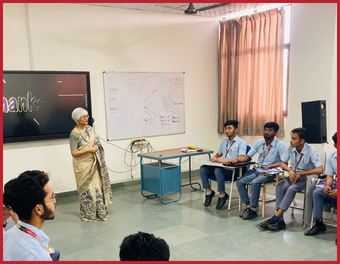
Happy2Age is a community-linked model: we work within existing residential complexes, activating shared spaces to bring seniors together for meaningful engagement that can improve physical agility; attention; cognitive abilities and social skills which improves overall well-being. We already have impacted more than 2000 members in the last 2 years.
Success, for me right now, is every day that it works. Every society we enter. Slowly, it will build into something much larger as part of the ecosystem that is conducive for aging and closer to where communities stay. We may not need to search for old age homes in the future.
On Women, Financial Independence, and the Future
Q: Given your work in the social sector, what is your view on financial literacy as a tool for women's independence?
It is not optional — it is critical. My own research with older adults in low-income communities in Mumbai showed a direct link: wherever women had provided education to their children and financial literacy, the care for elderly family members was better. Wherever that was missing, care suffered. Education translates into income, which translates into choices.
I know a woman who lived a happy, comfortable life as a homemaker for 24 years. Her marriage ended last year. Her alimony was barely enough. She has gone back to her parent's house, uncertain about everything. She has to start her life again. Such stories are increasing in India.
It is my mother who dreamt for her 4 daughters that we are educated and independent. I dream for my daughter too. These dreams in every generation gets passed on to make women tread newer paths like my mother’s dream.
My appeal to every woman is: be economically independent, start saving early, even small amounts. Don't wait until late, as I did. Financial freedom is what gives you the power to choose your life. I am running Happy2Age today, drawing no salary, on savings I built over 3 decades. That financial security is the only reason I can afford to follow my purpose. And that is everything.
I think I have fulfilled my mother’s dream!

Do you have any questions? Write to us
.png)