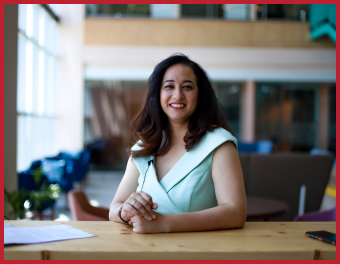

Meet Aditi Agrawal: The Vision Driving Gudgudee
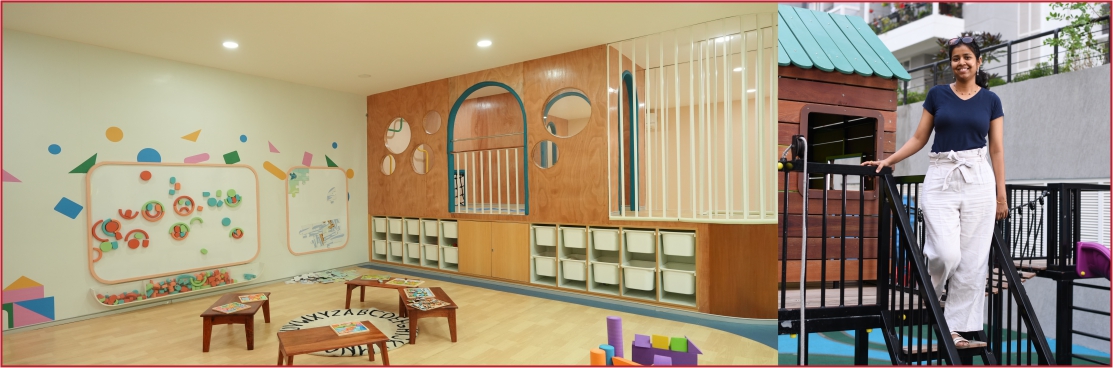
Aditi Agrawal has spent the better part of a decade rethinking what a playground can be and who it's truly for. Her studio, Gudgudee, is now based in Bengaluru, but the story begins somewhere else entirely.
During her time at the National Institute of Design in Ahmedabad, a course called Design for Special Needs would quietly change everything. As part of the program, she made regular visits to a school run by the Blind People's Association. Sitting in on classes, watching children navigate their days, she noticed something that seemed small but wasn't: children with disabilities were active participants inside the classroom, yet the playground outside remained largely out of reach.
That observation led to a question she couldn't shake how many differently abled children actually use public playgrounds? The answer she arrived at stopped her cold: almost none.
The Beginning of Gudgudee
What started as a classroom assignment grew into something far more significant. Aditi designed an inclusive playground concept built around a simple but radical idea that children of all abilities should play together, not separately. When the school expressed interest in building it, they did. The response was immediate and affirming, and it gave her the confidence to keep going.
In 2014, Aditi formally founded Gudgudee, a design studio dedicated to reimagining public play spaces. The guiding philosophy was clear: rather than creating separate, specialized solutions for children with disabilities, design for everyone from the start. Inclusion, in Aditi's vision, shouldn't be an afterthought, it should be built into the very nature of a space.
Challenges Along the Way
Founding Gudgudee meant making a profound personal shift. Aditi had trained as a designer that was her language, her comfort zone, the lens through which she understood the world. But building and sustaining a studio demanded something different. She made a conscious decision to step beyond what she knew and become an enabler: for her team, for her clients, and for the larger mission she was trying to advance.
That meant learning to understand financial models, developing the ability to pitch ideas to skeptical stakeholders, figuring out how to delegate effectively, and gradually building the operational backbone that a growing studio needs. None of it came easily. There were real failures along the way, pitches that fell flat, decisions that didn't pan out, moments where the gap between her design instincts and business realities felt wide. But each stumble became a lesson, and she kept moving.
Equally challenging was shifting how others thought about playgrounds. Most stakeholders had a fixed image in mind: swings, slides, maybe a climbing frame. Convincing them to imagine something richer, more sensory, more inclusive required patience and persistence. The concept felt unfamiliar, and unfamiliarity breeds hesitation.
What sustained her was a commitment to collaboration and a willingness to be surprised. Gudgudee's work evolved through close partnerships with child psychologists, therapists, educators, parents, and children themselves. And often, it was the children who taught her the most the way they actually engaged with a space frequently upended assumptions and pushed the designs somewhere better.
Recognition
The world has taken notice. Even before Gudgudee was officially founded, Aditi's college project earned the iF Design Award in Hamburg in 2013, drawing international attention to her work. In 2022, Gudgudee received the Zero Project Award, which recognizes breakthrough solutions in accessibility and inclusion.
On a national level, Aditi was named among the top 20 for NITI Aayog's Women Transforming India Awards in 2019 a recognition of women driving meaningful social change across the country. That same year, she was featured in Forbes India's 30 Under 30.
But perhaps the truest measure of Gudgudee's impact isn't an award. It's a child with a disability running toward a playground and finding, for once, that it was made for them too.
Aditi Agrawal Ma`am's view on why Financial Literacy is important for Women
Financial literacy for women is not just about managing money—it is about security, confidence, and autonomy.
When a woman understands how to earn and manage her finances, it brings a sense of mental peace and self-assurance. It allows her to make informed decisions, resist external pressures, and choose her path on her own terms.
Yet, many women are still not given equal access to financial resources or the knowledge to handle them. This gap goes beyond economics—it affects independence and self-worth.
Building financial literacy is therefore essential. It enables women to live with confidence, dignity, and the freedom to shape their own lives.

Do you have any questions? Write to us